Pultec EQP-1A: the passive EQ that won't retire
Hand-built in New Jersey in the 1950s, the Pultec program equalizer became a fixture at Abbey Road, Capitol and RCA. It's still on the desk today.
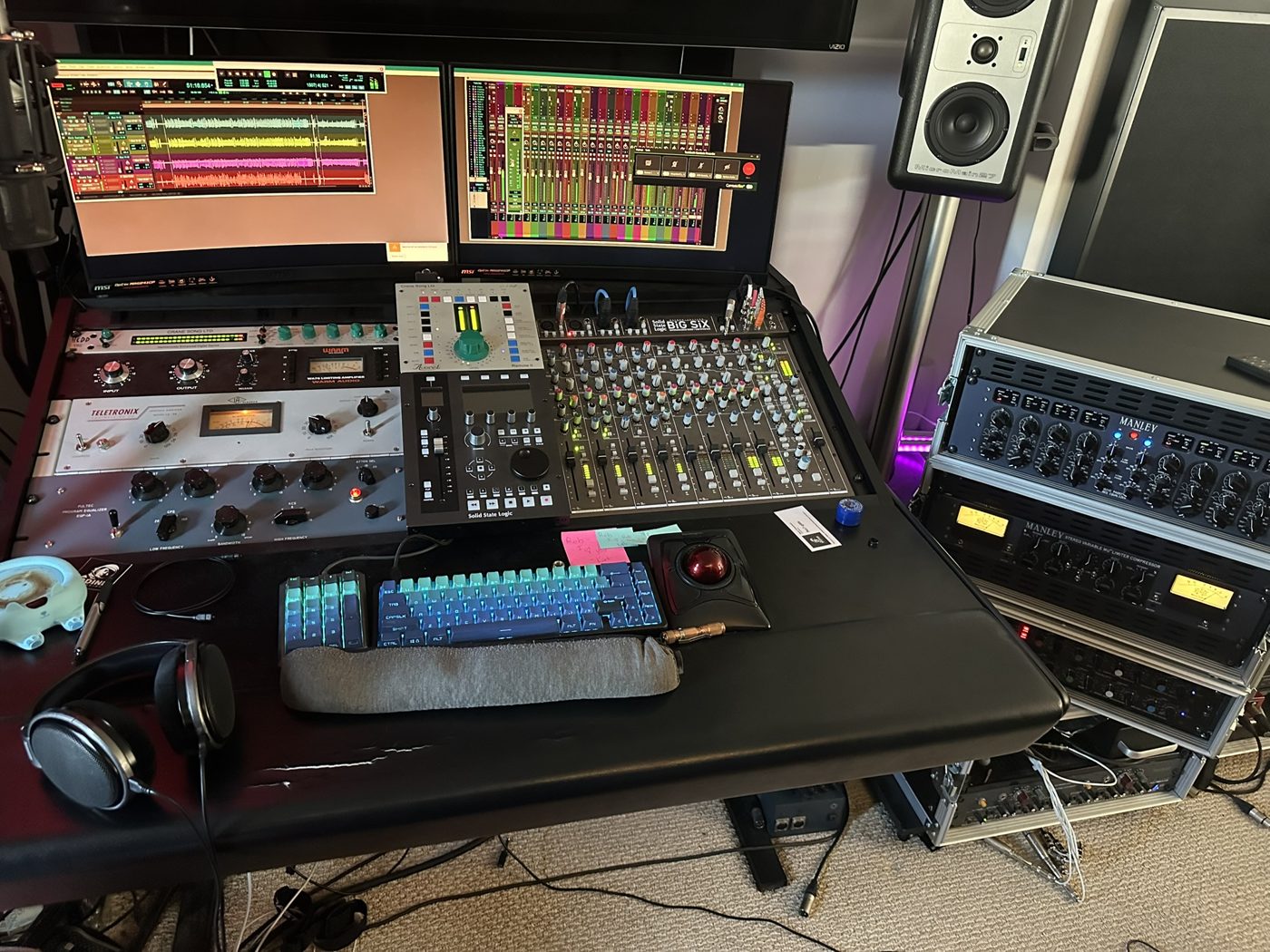
Two friends and a Western Electric idea
Pulse Techniques, better known as Pultec, was started by Eugene Shenk and Ollie Summerlin, classmates from the RCA Institute, in Teaneck, New Jersey. Their first program equalizer, the EQP-1, arrived in the 1950s, built around passive filter circuits licensed from Western Electric.
A passive EQ loses level as it works, so Pultec added a tube amplifier stage to make that level back up. The EQP-1A, introduced in 1961, added more frequency choices. Every unit was built by hand, and they ended up in studios such as Universal Recording, Capitol, RCA Victor, Abbey Road, Decca and Olympic.
Pulse Techniques stopped production in 1981. The name was revived in 2000, and today the EQP-1A lives on in reissues, clones and plugins.
How it works
The EQP-1A has three sections. The low end has separate Boost and Atten knobs that share one frequency switch: 20, 30, 60 or 100 Hz. The high end has a peaking boost with a choice of frequencies from 3 to 16 kHz and a Bandwidth knob from sharp to broad. A separate high-frequency attenuator shelves off the top at 5, 10 or 20 kHz.
The famous trick
Pultec's own manual said not to boost and attenuate the low end at the same time. Engineers did it anyway, and it became one of the best-known moves in mixing. Because the boost and the cut curves don't line up exactly, the result is more weight below the chosen frequency with a little dip just above it. On kick drum and bass, many engineers use it to add size while keeping the low mids clear.
The high boost with a broad bandwidth is just as popular for adding air to vocals, overheads or a whole mix without it turning harsh.
Quick facts
- Maker: Pulse Techniques (Pultec), Teaneck, New Jersey
- Founders: Eugene Shenk and Ollie Summerlin
- EQP-1A introduced: 1961
- Type: passive EQ with tube make-up gain
- Low frequencies: 20, 30, 60, 100 Hz