The 1073: British iron in a single module
Rupert Neve designed it as one channel of a London studio console in 1970. Today it may be the most copied preamp and EQ in recording.
One channel of the Wessex console
Rupert Neve built valve consoles in the early 1960s before moving to transistors. By the late 1960s he had settled on the BC182 and BC184 silicon transistors, and in 1970 Wessex Studios in London commissioned a music-recording console, the A88. It was the first console to use the new 1073 module: a microphone preamp and equalizer in one strip.
Consoles built from 1073s and their close relatives spread through studios in the early 1970s. One of them, the Sound City desk with early 1084 modules, now lives in Dave Grohl's studio.
Why it sounds the way it does
The 1073 uses class A gain stages and transformers at the input and output. The transformers, made with Marinair in the late 1960s, were there for isolation and gain staging, but they add a subtle harmonic saturation as they're driven. That coloration, often called "British iron," was never the goal, yet it's exactly what people chase today.
The EQ is inductor-based: a low shelf, a mid bell and a high shelf, plus a high-pass filter. The frequencies are fixed steps rather than sweepable, which keeps decisions quick.
Where it shines
A 1073 flatters almost anything with a microphone in front of it. It's a go-to for lead vocals, where the mid band brings a voice forward, and on drums, where pushing the gain adds weight to kick, snare and toms. Electric guitars and bass pick up thickness without losing clarity.
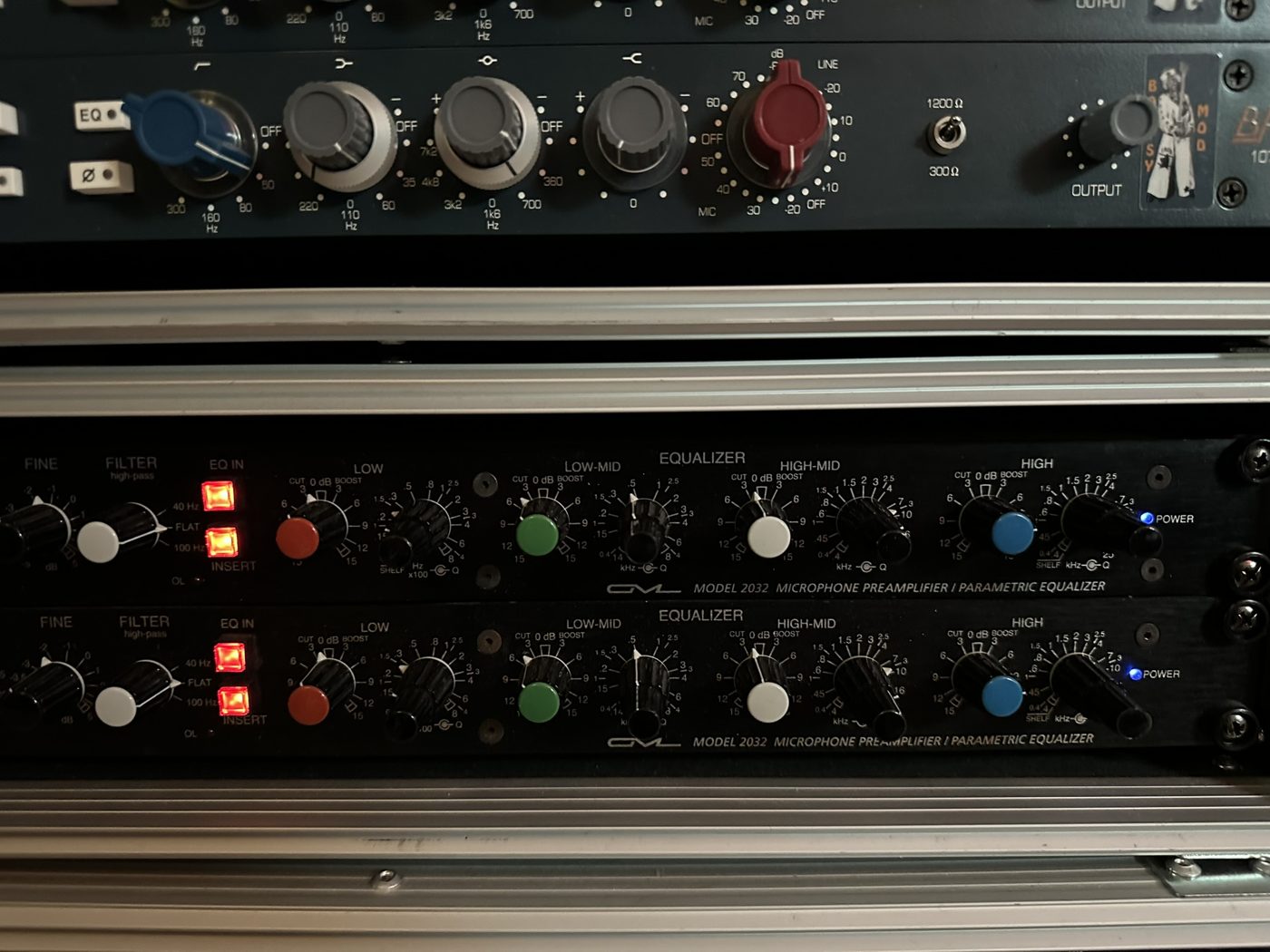
The BAE 1073 in the RAD rack is built on the original design.
Quick facts
- Designer: Rupert Neve
- First used: 1970, Wessex Studios A88 console, London
- Design: class A, transformer-coupled
- EQ: inductor-based low shelf, mid bell, high shelf, high-pass filter
- In the RAD rack: BAE 1073